
Incorporation
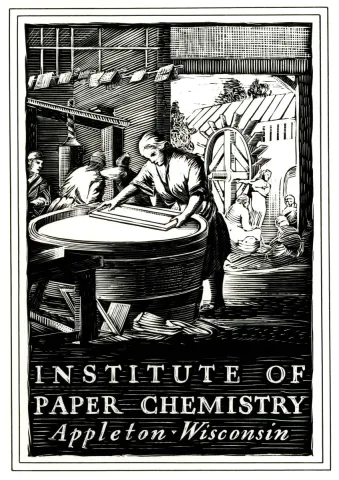
The Institute of Paper Chemistry (IPC) was incorporated as an educational institution in affiliation with Lawrence College in Appleton, Wisconsin.
First Degrees
Four degrees of Doctor of Philosophy and one master of science (the first degrees ever granted by the Institute) were conferred by IPC during the annual commencement exercises.
New Products
New war-time products developed by IPC include techniques for hardening wood as a substitute for scarce teakwood in naval vessels; the production of chemicals from wood tars used as antiseptics, food additives, and in textiles; the development of new adhesives and coatings for specialty war papers, including fungus resistant, mold proof, and water-resistant map papers.
Paperboard Cartons
IPC research and testing of the corrugated v-box established it as a cost-effective substitute for cumbersome wooden crates and solid fiber boxes. The beer and citrus industries rapidly switched from wooden crates to paperboard cartons.
World Recognition
IPC was recognized as a world center for research in pulp, paper, and paperboard industries.
Paper Was the Fifth Largest U.S. Export
In the Southern United States, pulp and paper were now as important as cotton and fruit thanks to good forestry practices, scientific research, and the partnership of government and industry. Paper was the fifth largest U.S. export.
Methods of Wood Chemistry
IPC awarded its 250th Ph.D. and graduated its 400th M.S. student the following year. A book titled Methods of Wood Chemistry was authored by B.L. Browning of IPC.
Chemotherapeutic Agents
IPC signed an agreement from U.S. Army Medical Research and Development Command for research for new chemotherapeutic agents as a treatment to malaria.
First Woman to Receive a Degree From IPC
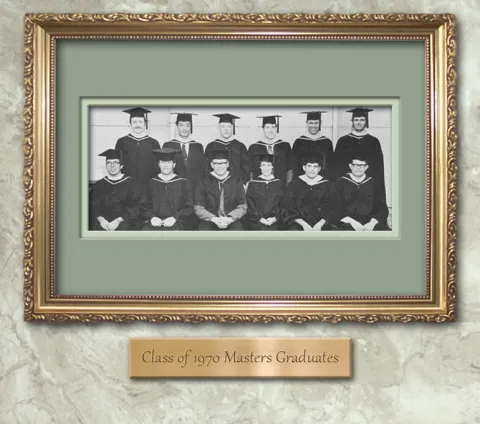
Marilyn Kinsey, the first woman to receive a degree from IPC, was awarded a Master of Science Degree.
Cold Corrugating Process
IPC in cooperation with the U.S. DoE and the American Paper Institute conducted a full-scale plant trial of the cold corrugating process at a Union Camp box plant in Savannah, Georgia. Commercially available equipment was purchased and installed with minor modifications.
IPC Renamed
The IPC was renamed the Institute of Paper Science and Technology.
IPST First Employees
1989 The IPST first employees arrived in Atlanta to unpack and open the Institute for business. The temporary facility was named the IPST Industrial Research Facility.
Formal Alliance
IPST and Georgia Tech established a formal alliance agreement.
Paper Tricentennial Building
A Ground Breaking Ceremony was held for the Paper Tricentennial Building. International guests from the paper industry, government officials, university presidents, and executives from the business community were in attendance.
Paper Tricentennial Building Dedicated
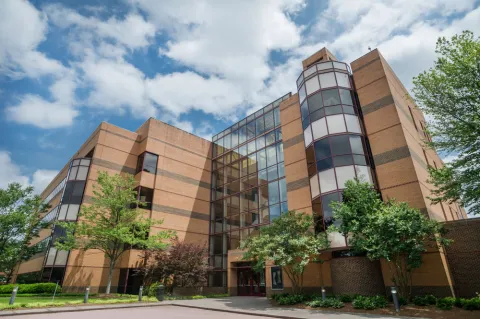
IPST's Paper Tricentennial Building (PTB) was dedicated as part of the 1993 Executives' Conference, which was attended by senior executives of the international paper industry, governmental officials, presidents of local universities, and other officials of the business community.
IPST merges with GT
IPST merges with GT; Endowment Institute for Paper Chemistry Foundation transferred to GT Foundation.
IPST changes name to RBI
IPST changes name to RBI; RBI awarded endowment funded project to develop membrane technology for kraft black liquor; first RBI Fellow awarded.
Center for a Renewables-Based Economy From Wood
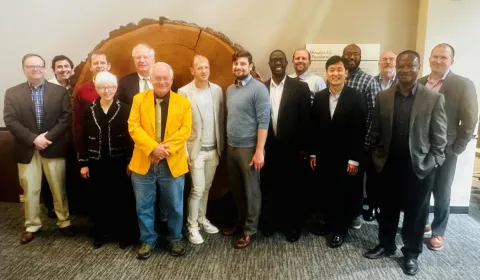
The Center for a Renewables-Based Economy From Wood is formed.
Multiphase Forming Lab Opens
Multiphase Forming Lab Opens.
Georgia Forestry Innovation Initiative awards $8.9M to Georgia Tech
Future Regenerative Campaign
Beyond 2025. The Future Regenerative use of natural materials / campaign connection positioning RBI as leader in use of natural materials as plastic alternatives in packaging.
Electrified Drying Technology
Beyond 2025. Electrified drying technology to transition paper making to use of renewable electricity - affiliated with major grant.
Innovation to Elimainate CO2 Emissions From Paper Machines
Beyond 2025. A comprehensive approach to innovative refining, paper forming, and drying to eliminate CO2 emissions from paper machines.
100th Anniversary
Celebrate 100th Anniversary of RBI.